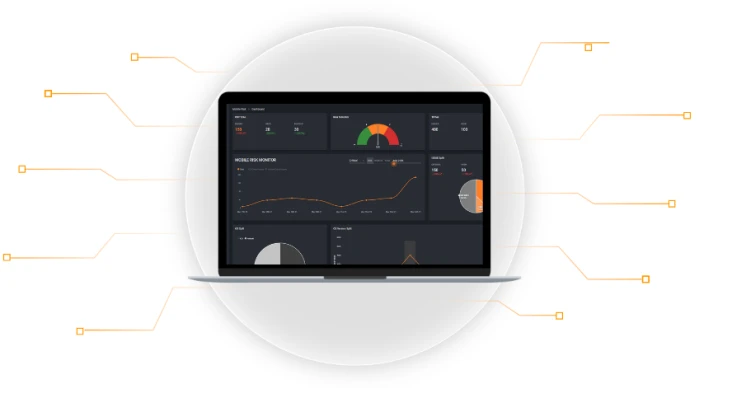

Clarity on cyber risk starts here.
In just 30 minutes, you’ll receive a complete, business-relevant view of your cyber risks — automatically generated, easy to understand, and action-oriented. Get started now and experience SEQiFY live.
Managed Acceptance of Cyber Risks

Patching, updating, securing - in cybersecurity, reaction is the order of the day. But what if a security update causes more damage than the underlying risk itself? The reflex to immediately eliminate every identified risk can cost companies dearly: through outages, incompatibilities, or even complete system crashes. This is precisely where the concept of risk acceptance comes in: consciously, justifiably, and documentedly allowing a risk to remain.
In practice, there are four common strategies for risk management:
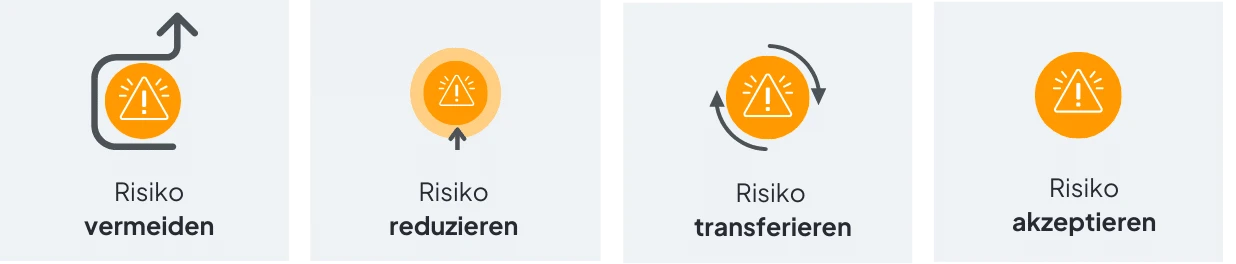
AVOID RISK:
Risks are mitigated by avoiding potentially dangerous activities or halting projects (e.g., not using an app, not implementing a system).
Drawback: This strategy can hinder innovation and put companies at a competitive disadvantage.
REDUCE RISK:
Risks are mitigated through technical or organizational measures (e.g., security updates, access restrictions).
Drawback: Implementation can be time-consuming and resource-intensive, and the measures are not always fully effective.
TRANSFER RISK:
Risks are transferred to third parties, for example through insurance or outsourcing.
Drawback: Residual risks remain, and liability issues and costs are not always easy to calculate.
ACCEPT RISK:
Risks are deliberately accepted when other options are disproportionate or unfeasible.
Drawback: There is a risk that accepted risks will be forgotten or will escalate unnoticed—if there is no systematic monitoring.
Not every risk can be eliminated, but every risk requires a decision.
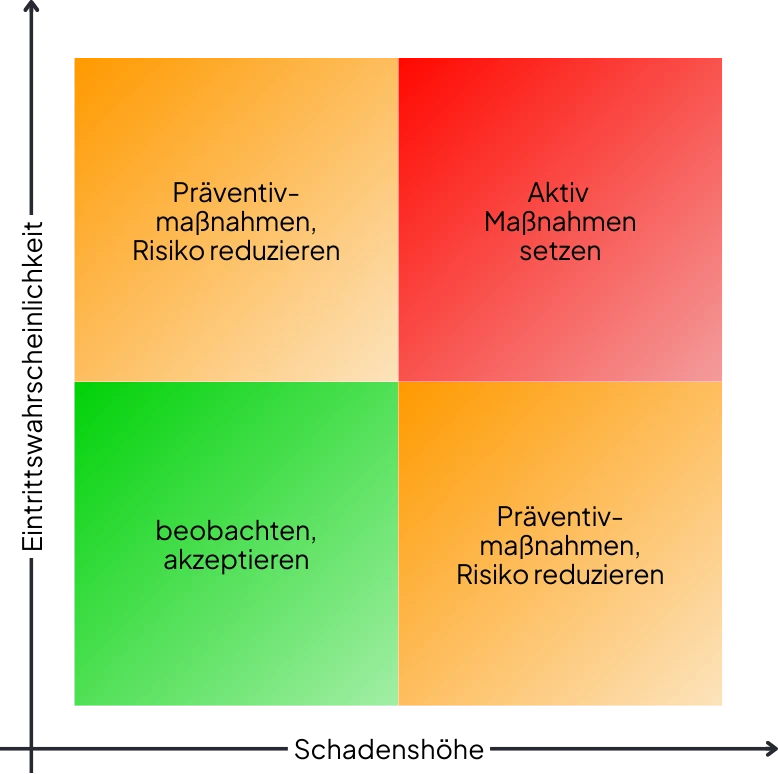
In practice, risk assessment is typically based on two main factors: probability of occurrence and magnitude of loss. These two factors form the basis for many risk-related decisions and are central to the prioritization process.
However, other relevant factors are often overlooked, even though they play a decisive role in determining whether a risk is acceptable or not. These include, for example, the economic feasibility of countermeasures or regulatory requirements such as compliance or audit standards, as well as timing considerations - such as whether an affected system is scheduled to be taken out of service soon anyway.
Only by considering all these criteria together can well-founded and transparent decisions be made.
Probability of occurrence: How realistic is the scenario?
Extent of damage: What would be the worst-case scenario?
Cost-benefit ratio: Is the countermeasure economically viable?
Maturity of the measures: How effective are alternative protective mechanisms?
Regulatory requirements: Are there compliance requirements?
Time factor: Will the affected system be replaced or decommissioned soon?
These criteria help ensure that decisions are fact-based and transparent, rather than setting the wrong priorities under pressure to act.
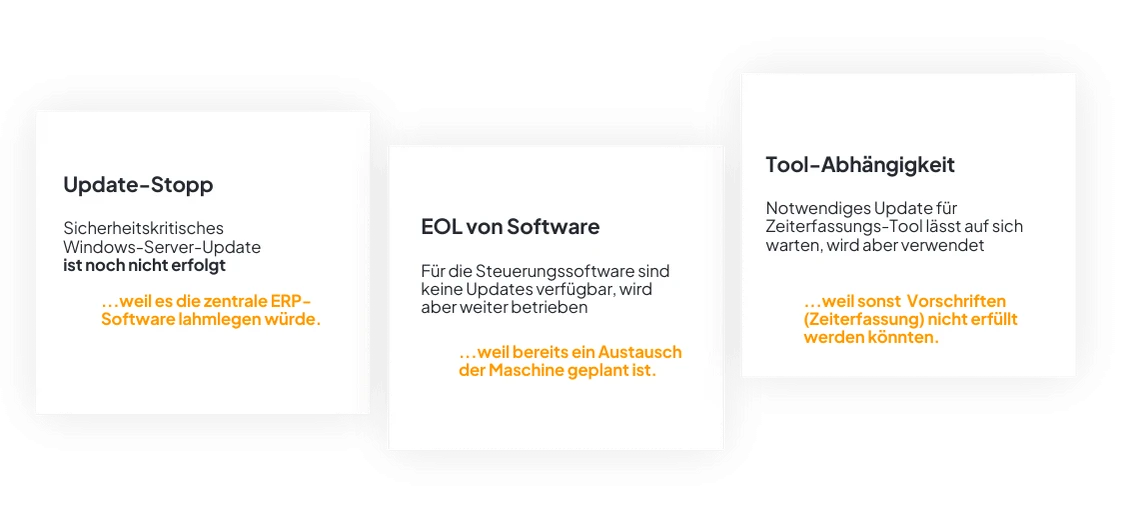
A common misconception: Anyone who accepts a risk is acting negligently. In fact, the opposite is true. Ignoring risks is risky—accepting them is strategic. The key is that acceptance:
is well-founded,
is documented,
has a defined validity period, and
is reviewed regularly.
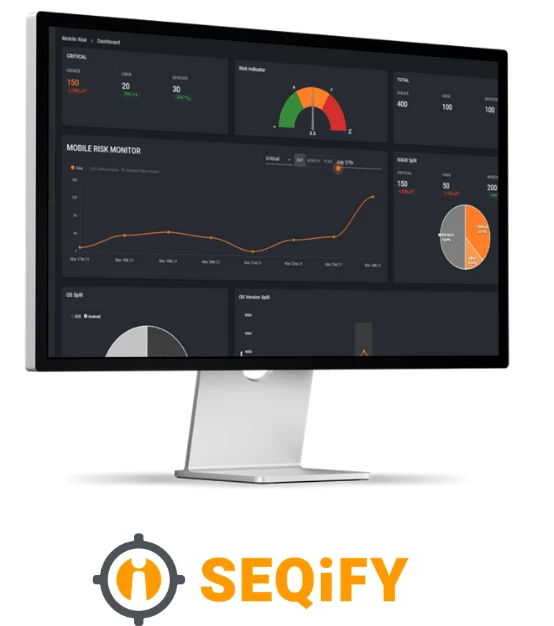
Complete overview of all accepted risks,
including status, rationale, and deadlines
Accurate risk indicator -
no distortion caused by risks already addressed
Transparent documentation
Simple approval process -
role-based and traceable
Not every identified vulnerability needs to be addressed immediately. By accepting risks in a controlled manner, you free up resources for more strategically important issues—without compromising security. The prerequisites: transparency, a systematic approach, and a professional tool like SEQiFY.
Risk acceptance is a valid strategy.
SEQiFY makes this decision transparent and manageable.