Threat Assessment,
Risk Based Vulnerability Management
All risks in one platform.
From technical findings to real-world risks: Automatically assess vulnerabilities and prioritize them based on business impact.
40+
Connectors
24h
Real-time Risk Overview
21,95%
Risk Reduction in 30 Days
100%
EU Cloud & ISO 27001
Not every vulnerability is a risk.
Traditional vulnerability management often results in endless lists—and in the end, it’s unclear where to start.
Risk-Based Vulnerability Management (RBVM) takes a different approach: It evaluates vulnerabilities not only based on technical severity but also on actual risk - that is, on how relevant a vulnerability really is to your business.
To do this, SEQiFY combines information on
affected systems,
and potential impact.
This allows you to see at a glance which risks really matter and to prioritize your actions accordingly.
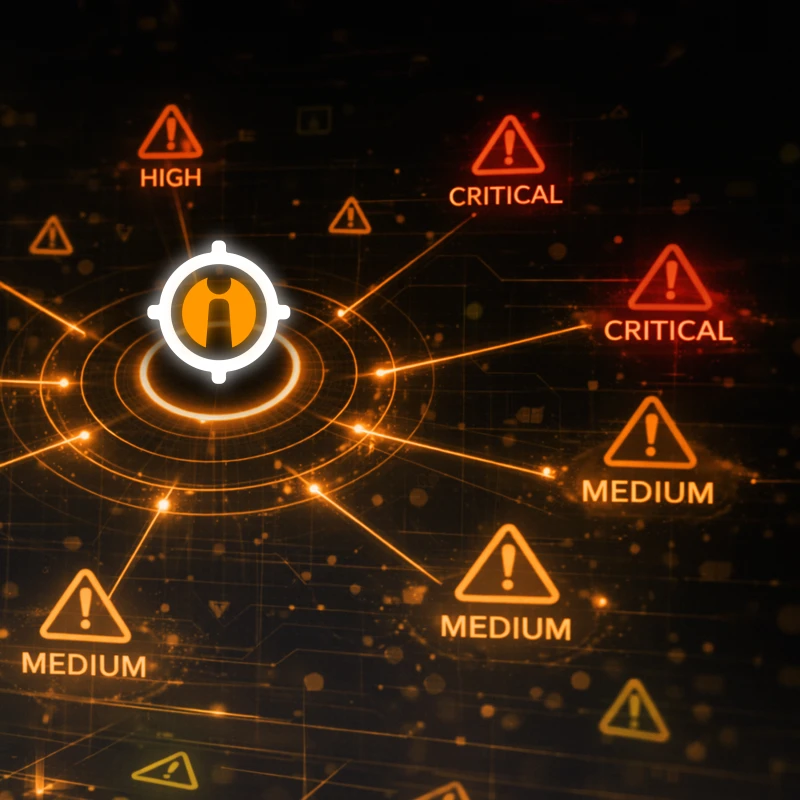



From a finding to a business-relevant risk
Why a structured RBVM process is crucial
Cyber risks do not arise from vulnerabilities alone—but from a lack of context, a lack of prioritization, and unclear responsibilities.
SEQIFY aggregates findings from over 40 IT and security systems, automatically enriches them, and transforms them into prioritized, manageable enterprise risks.
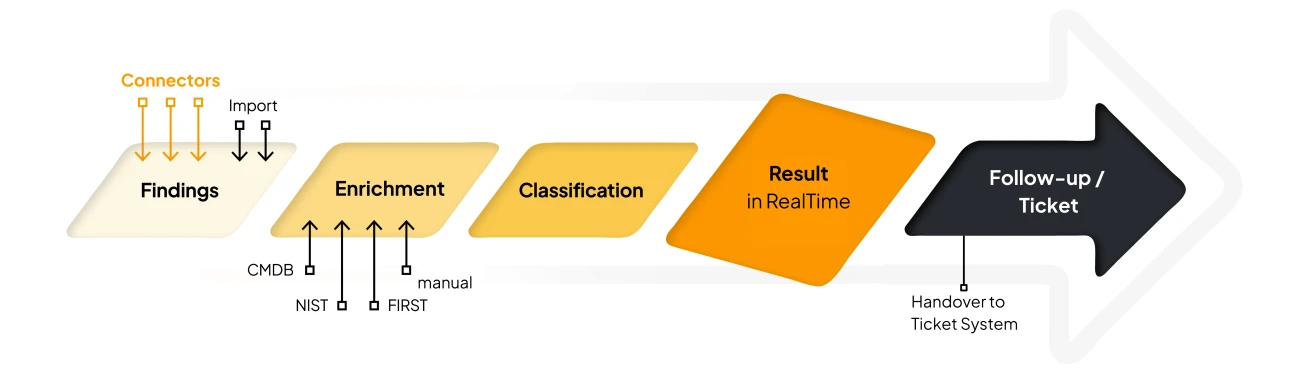
A process that turns data into decisions
and risks into clear actions.
1. Data Sources & Findings
All vulnerabilities, alerts, and findings are automatically imported from various sources - such as vulnerability scanners, penetration tests, or other security tools. This data serves as the foundation for further risk assessment.
Automated consolidation of all security findings
Risk data from over 40 systems: scanners, SIEM, cloud, AD, endpoints, infrastructure, penetration tests
Consistent standardization of all findings
Consolidation of redundant or duplicate vulnerabilities
A centralized platform instead of tool silos
Result: A comprehensive, refined set of findings—serving as the basis for effective prioritization.
2. Enrichment
The raw findings are supplemented with additional information:
CMDB data (assets, systems, criticality)
NIST/FIRST data (threat intelligence, exploitability)
Manual additions (e.g., responsibilities, context)
This provides a comprehensive, context-specific picture of the vulnerability in question.
3. Classification & Prioritization
SEQiFY evaluates each finding based on defined rules and metrics:
Risk score
Criticality of the affected asset
Priority and type of vulnerability
Classification can be automated or adjusted manually as needed.
4. RESULTS: Findings in the Context of Risk
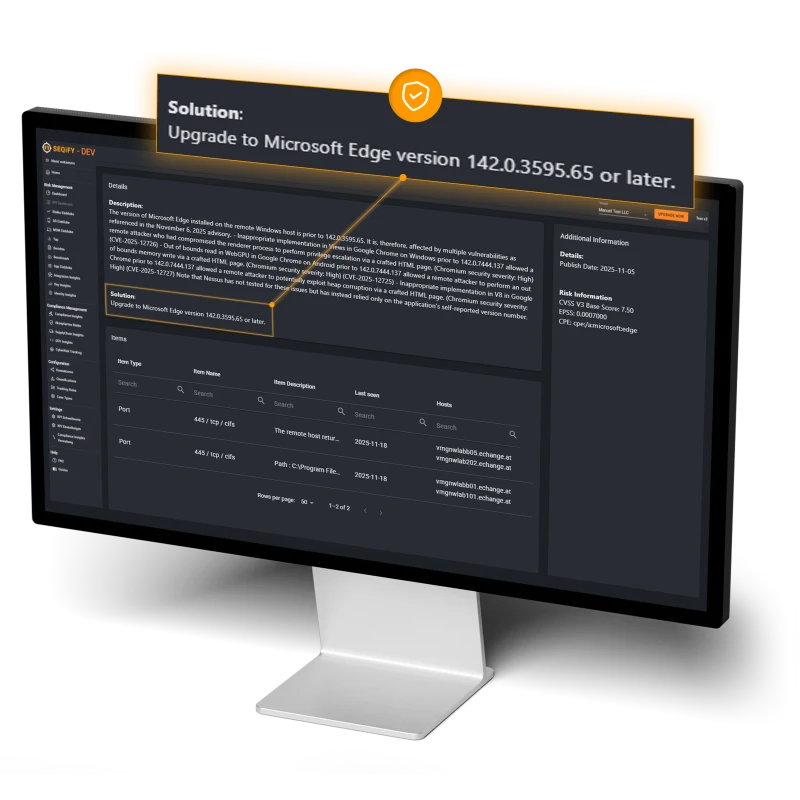
Asset Insights immediately show which assets are affected by which vulnerabilities, including a priority rating.
Vulnerability Details
Enriched Context
Prioritization and Recommendations
This provides clear, actionable risk insights in real time.
5. Tracking & Ticketing
SEQiFY can automatically trigger actions for critical findings:
Forwarding to ticket or case management
Rules for automatic forwarding
Transparent processing and status tracking
Tickets can also be optionally forwarded to an integrated ticketing tool (including synchronization).

Practical Experience, Real-World Solutions
Easy to understand for security, IT operations, and management

Understanding Vulnerabilities
Recommendations & “What-If” Scenarios

Assessing Risks
Vulnerabilities + Users + Devices + Vendor Data + EOL/EOS.

Manage actions
Automatically assign all findings to assets and responsible parties.
Enterprise features that turn back the clock.
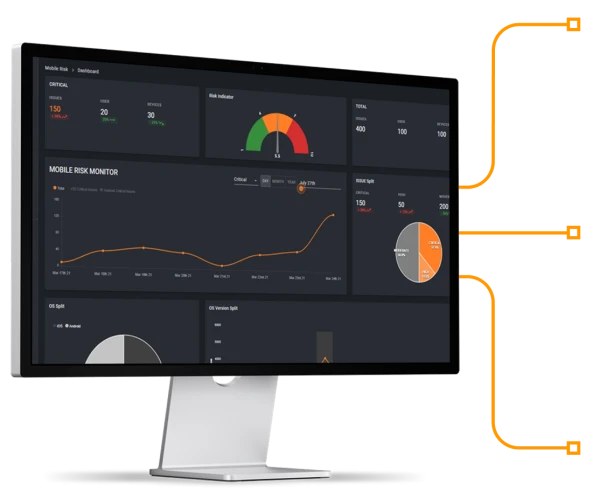
Asset Insights
Automated mapping of enriched risks to assets
Multi CMDB
Integration and enrichment of data from multiple CMDBs for risk classification.
Ticket Workflows
Automatic or manual ticket creation with transfer of relevant finding information for mitigation, including bidirectional synchronization.
One Platform
A 360° view of findings for CISOs, IT directors, and VM managers, with reports for SOC and operations teams organized by area of responsibility.
Auto Prioritization
Automatic prioritization of resolutions through dynamic rules based on asset enrichment details.
Cyberrisk Tracking
Handover and management of security operations for all IT staff
Separation of Duties
Role-based authorization model, multi-client capable, with a clear separation of information, responsibilities, and decision-making authority; display by asset group and limited to respective areas of responsibility
Vulnerability Enrichment
Enrichment with risk information from various Finding sources, the CMDB, global data sources, and frameworks, featuring automatic risk classification, ranking, and real-time results in Asset Insights.
Automated User/Group Management
Automatic user creation with asset/permission mappings based on Active Directory Federation Services (AD FS), including permission inheritance (Enterprise Feature)
Automated Risk Analysis
up-to-date
Central Findings
All findings aggregated and normalized from penetration tests, network scanners, and manual sources.
Identity Provider Integration
Automatic import of predefined groups is possible (Enterprise feature)
RBVM with SEQiFY provides clarity - at every level.
For security teams:
Less noise, clear priorities
Asset-based risk transparency
Automated actions & allocations
For IT Operations:
Clear Work Assignments & Ticket Workflows
Transparent Responsibilities
Measurable Progress
For CIOs, CISOs, and management:
Measurable Overall Risk (1–10, A–F)
Trends, Forecasting, and Target-Actual Comparison
Compliance with NIS2, DORA, ISO 27001, TISAX
SEQiFY supports stakeholders in fulfilling their operational, strategic, or regulatory responsibilities.


Features in Detail
8 Highlights
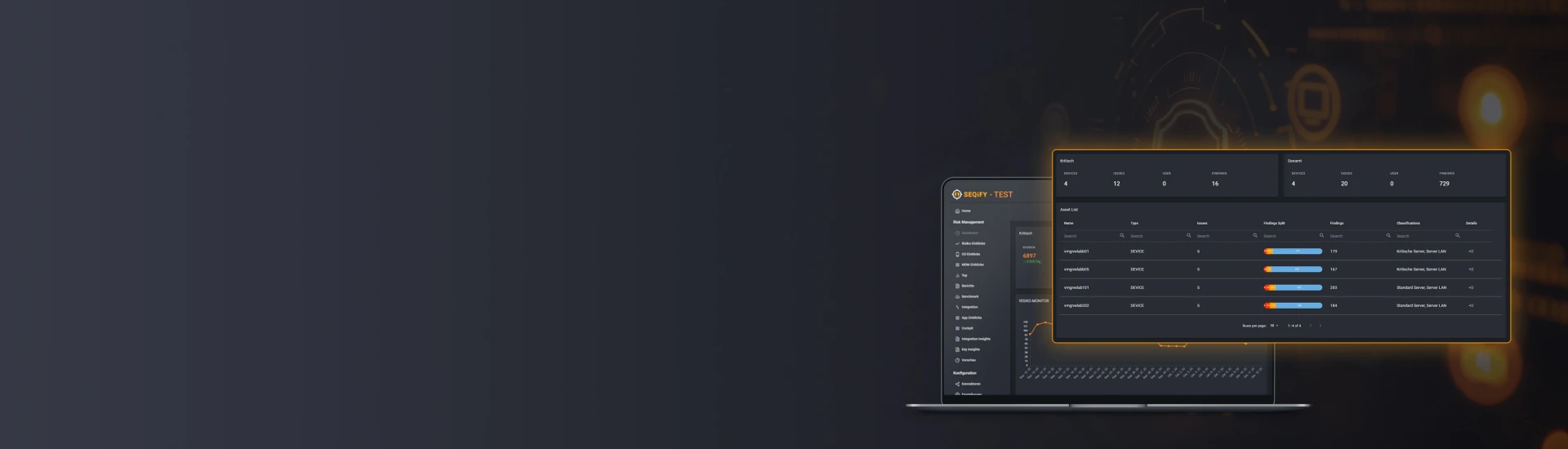
All risks per asset
AT A GLANCE
With SEQIFY, you get a comprehensive, cross-system overview of the actual risks associated with each asset. Findings from scanners such as Nessus are automatically mapped to the relevant systems, servers, endpoints, or applications. This provides, for the first time, a consistent view of your entire IT landscape - including criticality, responsibilities, and actual risk per asset.
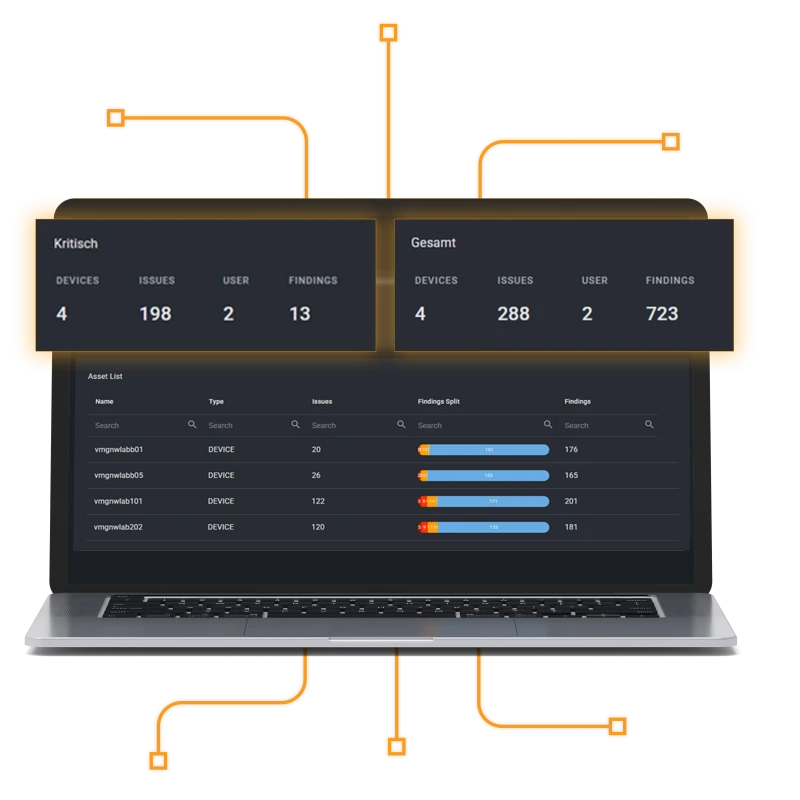
Business Context
SEQIFY combines technical vulnerabilities with business context, such as asset value, usage type, availability, confidentiality, and responsibilities.
The result: Risks are not only identified but also properly prioritized. Teams can immediately see which assets are truly at risk and where action needs to be taken first - without manual filtering or Excel chaos.
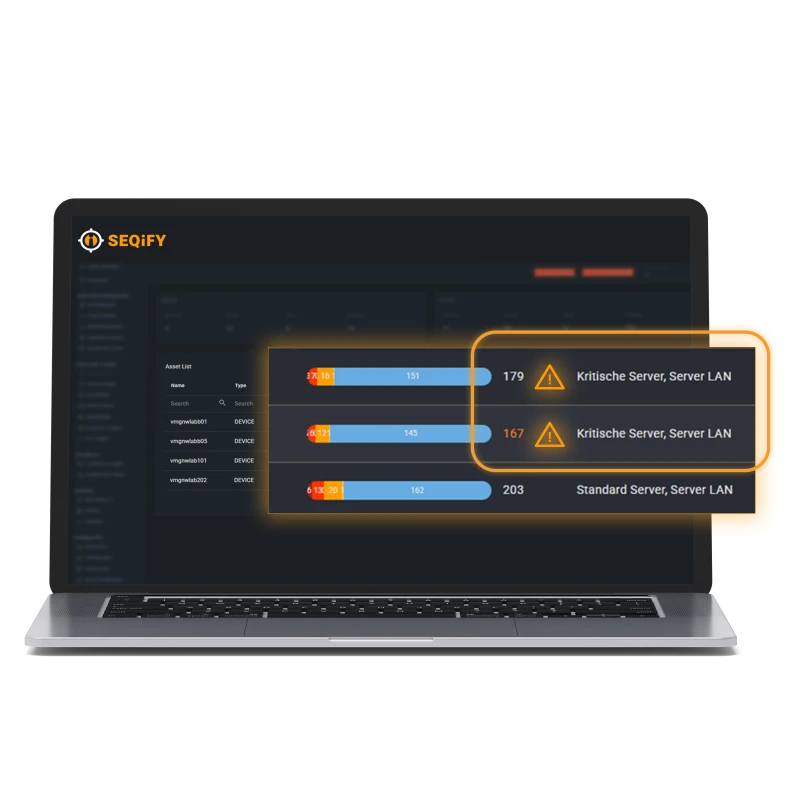
Relevant Insights
FOR IT TEAMS & MANAGEMENT
SEQiFY Asset Insights provides IT management with clear, actionable insights: which risks are critical, which systems are affected, and which measures should be prioritized.
The data can be segmented, filtered, and used directly for business impact analyses or further processing in tools such as CRISAM.
This transforms a multitude of findings into a manageable, transparent risk profile.
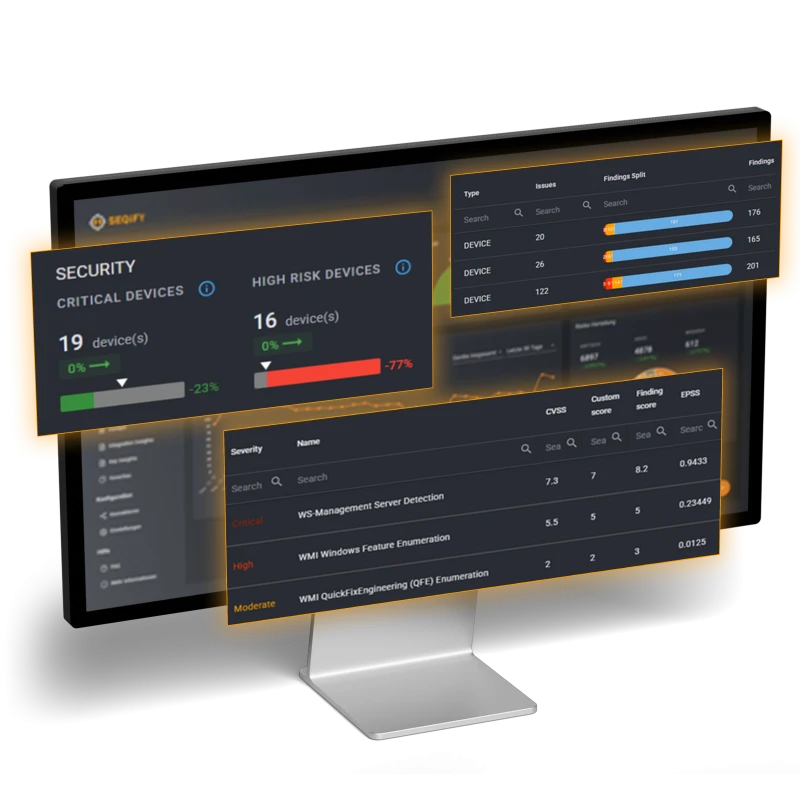
All vulnerability data. One model.
FULLY ENRICHED
SEQiFY aggregates data from over 40 systems—including Nessus, Tenable, Defender, SentinelOne, Trivy, MDM systems, directory services, HR, awareness, development, and supply chain.
All data is:
automatically consolidated and normalized
enriched with global threat intelligence (CVSS, EPSS, NIST, vendors, EOL/EOS, compliance)
linked to asset and business context
The result: precisely assessed vulnerabilities that are prioritized in a transparent manner.
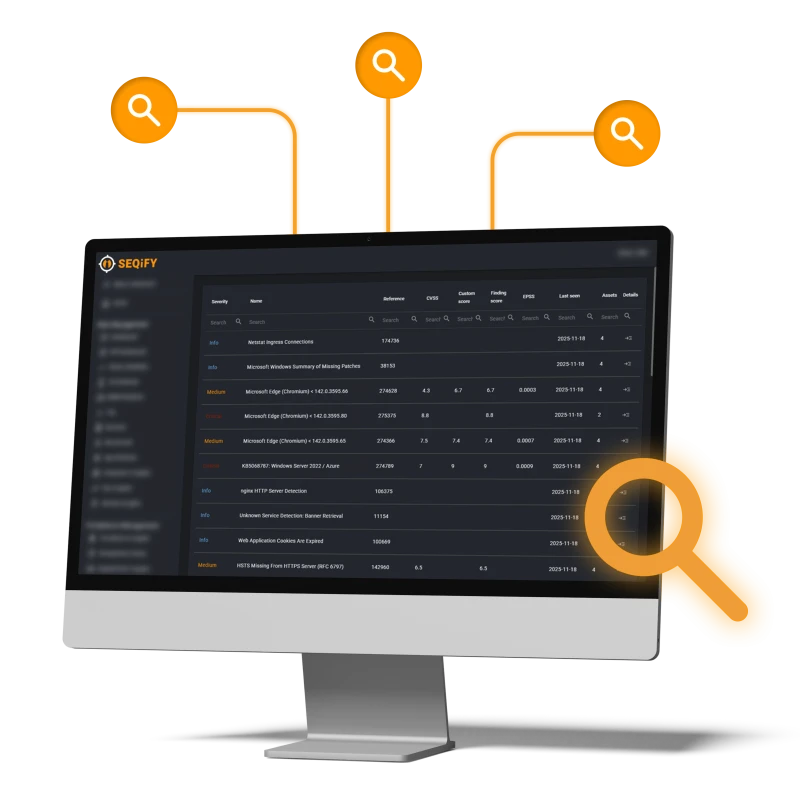
Prioritization based on actual risk
NOT JUST BASED ON CVSS.
SEQiFY evaluates not only technical severity, but also:
EPSS probability of active exploitation
Asset Criticality & Exposure
Context: User roles, EOL status, patch availability, system type
Organizational Responsibilities
This results in a risk score (1–10) and a risk rating (A–F) for true comparability—both internally and externally.
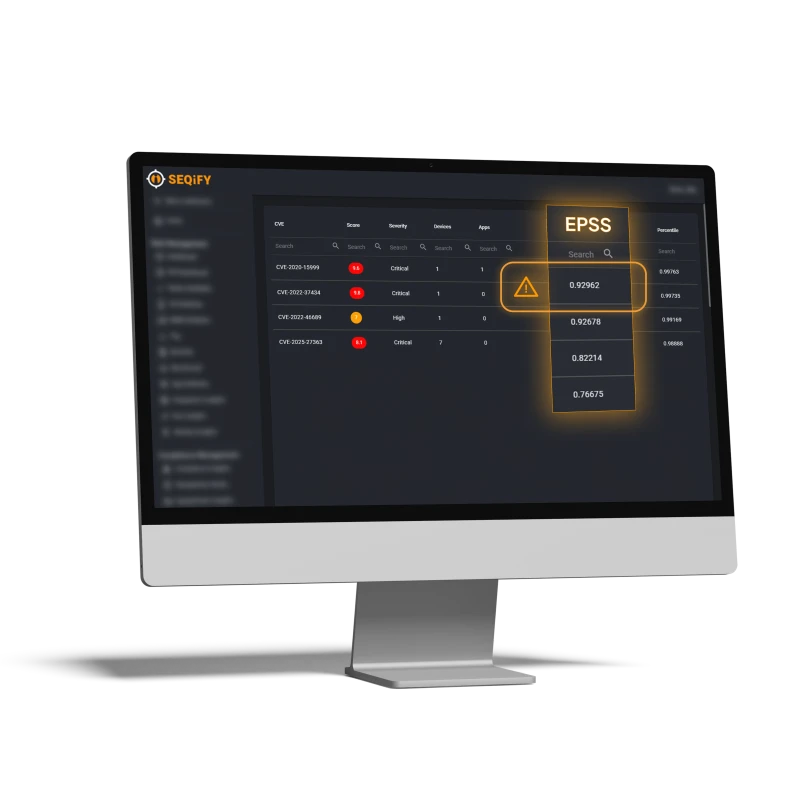
Ranking of assets by risk.
ALL ASSET RISKS IN ONE PLACE AND UP TO DATE.
All findings are automatically assigned to the relevant assets and supplemented with CMDB, MDM, or directory data.
Teams receive:
Complete asset risk lists
Drill-downs by OS version, app versions, and patch status
Filter by teams, countries, responsibilities
Real-time prioritization for rapid implementation
This provides full transparency for IT operations, security, and management.
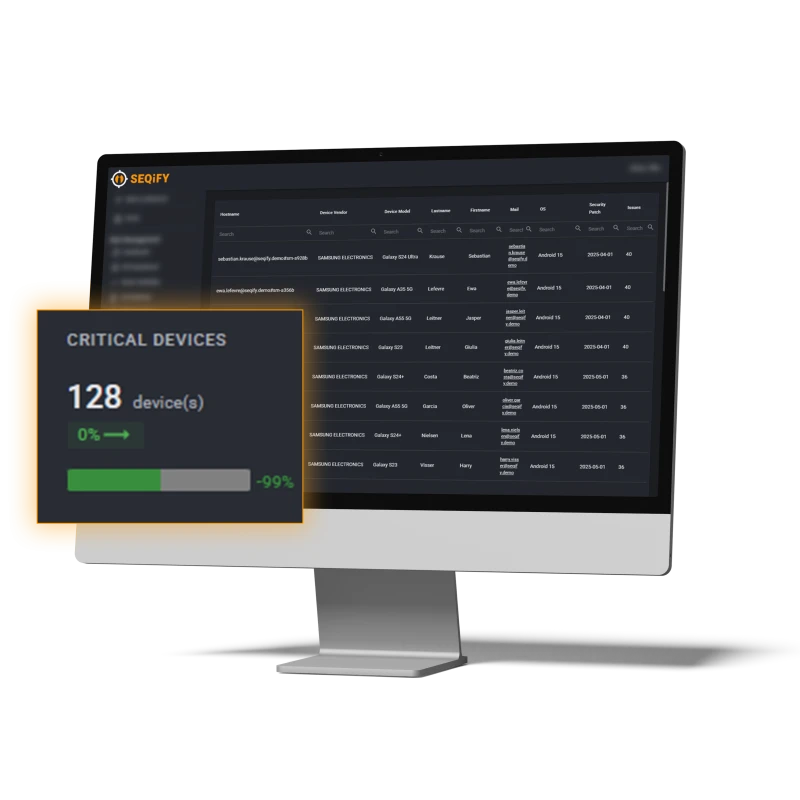
From detection to resolution
END-TO-END TRACKING.
SEQiFY automatically forwards findings to ticketing systems such as Jira, ServiceNow, or Asana—based on defined rules, e.g.:
“CVSS ≥ 9 and asset criticality = high → Create a ticket”
“Risk remains critical for > 3 days → Escalation”
Feedback from tickets is automatically fed back into the dashboard - including SLA tracking.
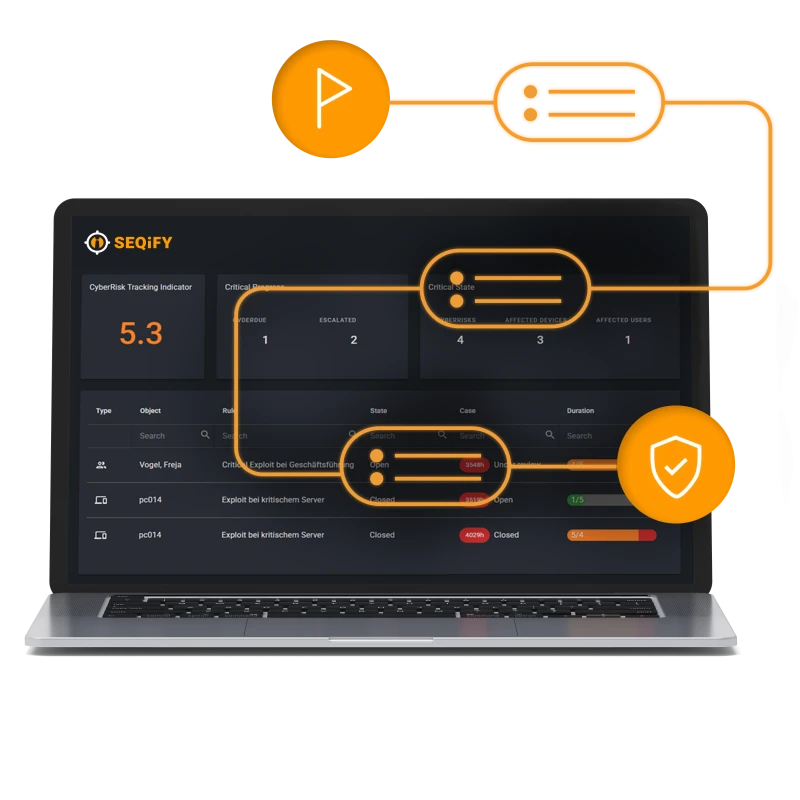
Specific measures
with a measurable impact.
SEQiFY clearly shows which measures have the greatest impact on overall risk - including:
Risk reduction (%)
“Best-case risk indicator” following implementation
Recommendations for patches, workarounds, configurations, or organizational measures
This allows teams to manage their work not reactively, but in a targeted and measurable way.